The dress is made of lightweight cotton. The print is particularly striking with large and colourful Gothic floral motifs. The bodice is lined in cotton and muslin and fastens with hooks down the front. There seems to be evidence that the dress was restyled, probably in the mid-late 1830s. It looks like the dress originally closed in the back, but at some point, it was changed to a front closure; this would have been far more practical if someone was getting dressed without help. In fact, the overall simplicity in the shape of the dress points to this being more of a provincial and practical garment. The various bodice lining fabrics probably refer to the various restyling. The dress is an interesting example of how advancements in textile printing by the 1830s had made colourful and decorative cottons much more affordable to the working classes. The skirt is very full, with the majority of the fullness gathered into the back. The front of the skirt has much less fabric pleated into it. The interior of the piped waistline has rather a large amount of excess skirt fabric folded on the inside.
The dress is in good condition for its age; the fabric is strong with very few holes and very minor staining. There is some old mending to the front of the bodice. Possibly later replacement hooks and a 20th-century press stud at the top of the skirt opening.
Approximate measurements
Bust - 36 inches
Waist - 28 inches
Front Length - 46 inches
The dress is made of lightweight cotton. The print is particularly striking with large and colourful Gothic floral motifs. The bodice is lined in cotton and muslin and fastens with hooks down the front. There seems to be evidence that the dress was restyled, probably in the mid-late 1830s. It looks like the dress originally closed in the back, but at some point, it was changed to a front closure; this would have been far more practical if someone was getting dressed without help. In fact, the overall simplicity in the shape of the dress points to this being more of a provincial and practical garment. The various bodice lining fabrics probably refer to the various restyling. The dress is an interesting example of how advancements in textile printing by the 1830s had made colourful and decorative cottons much more affordable to the working classes. The skirt is very full, with the majority of the fullness gathered into the back. The front of the skirt has much less fabric pleated into it. The interior of the piped waistline has rather a large amount of excess skirt fabric folded on the inside.
The dress is in good condition for its age; the fabric is strong with very few holes and very minor staining. There is some old mending to the front of the bodice. Possibly later replacement hooks and a 20th-century press stud at the top of the skirt opening.
Approximate measurements
Bust - 36 inches
Waist - 28 inches
Front Length - 46 inches

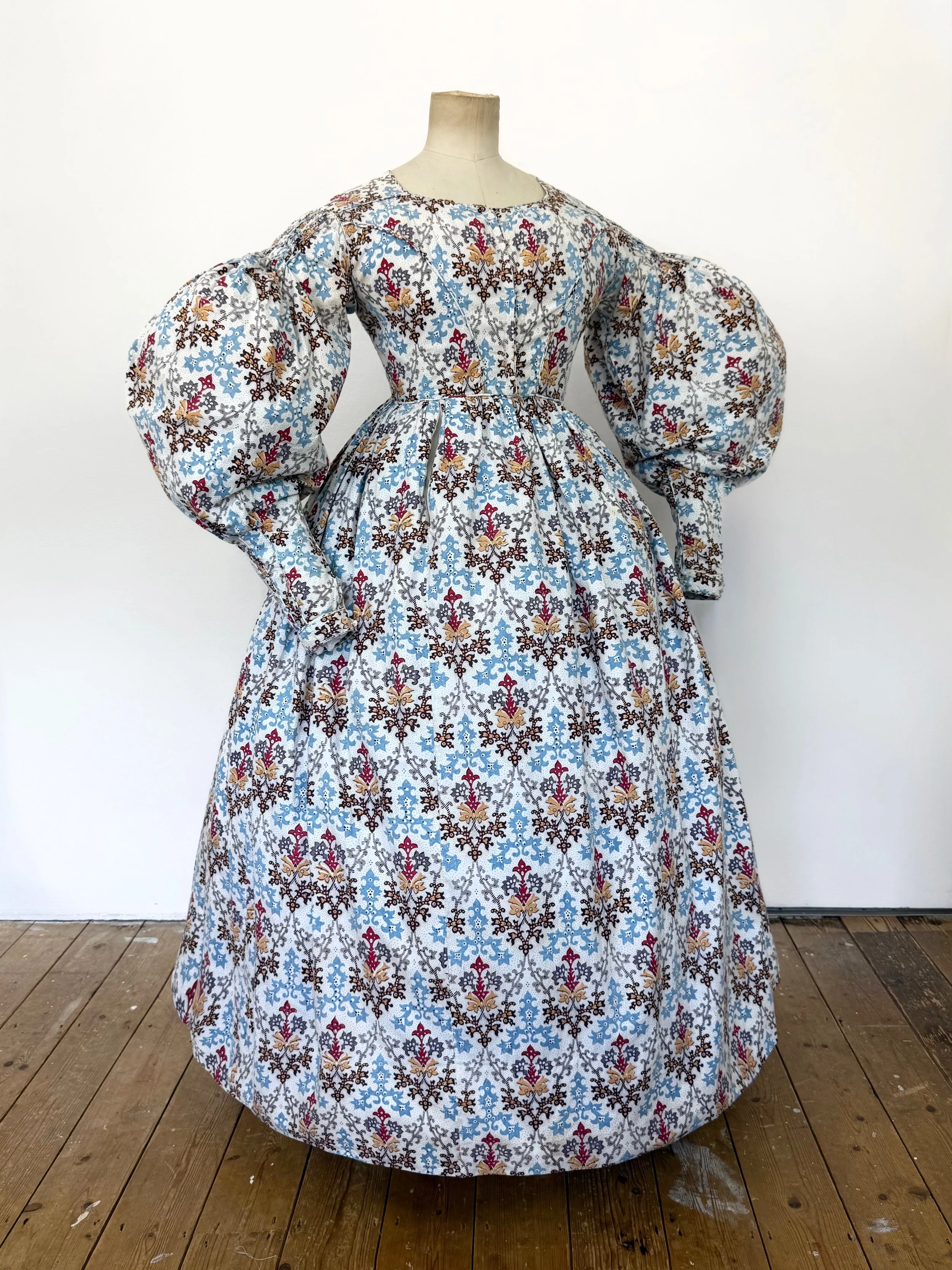 Image 1 of 23
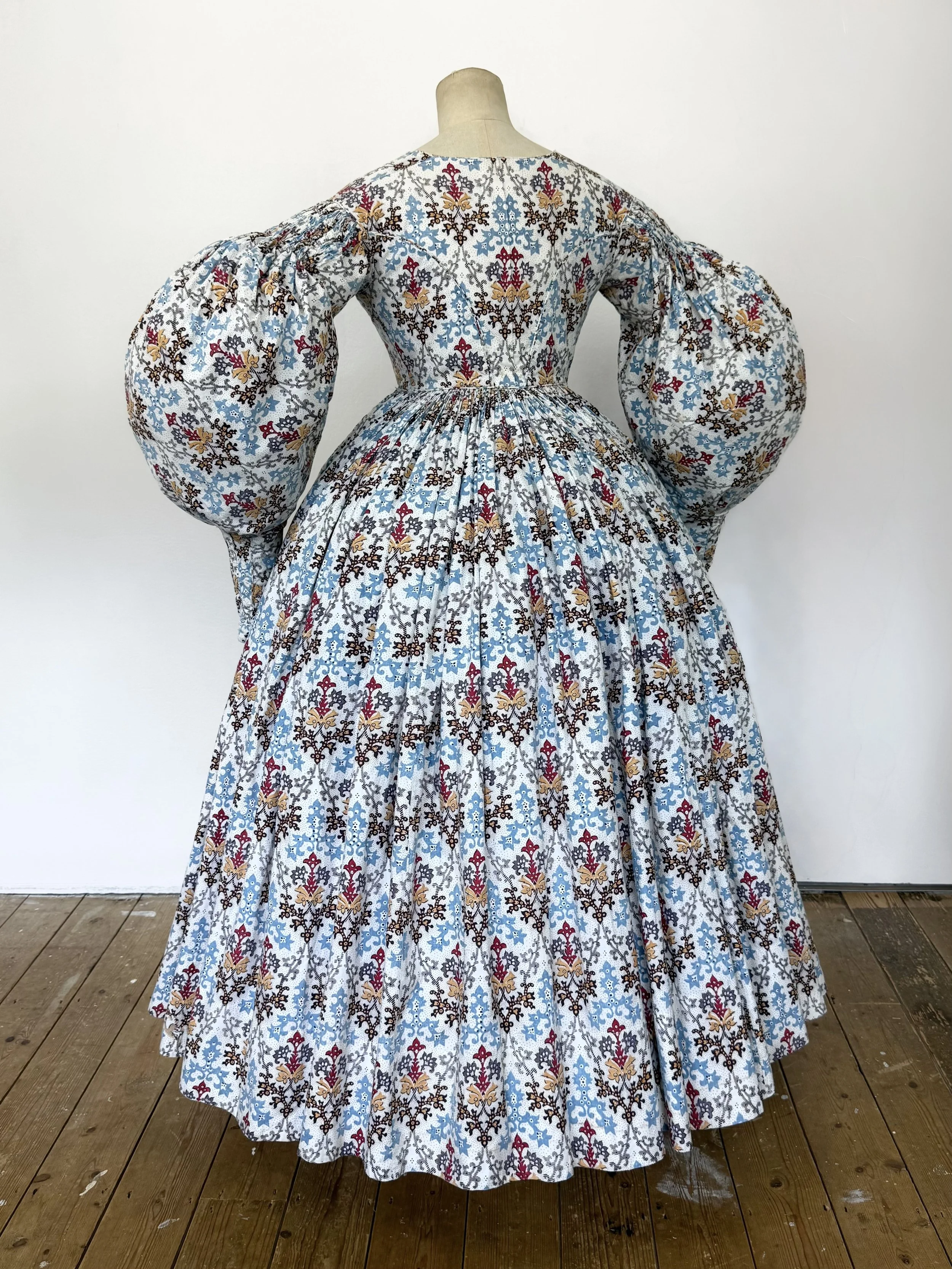 Image 2 of 23
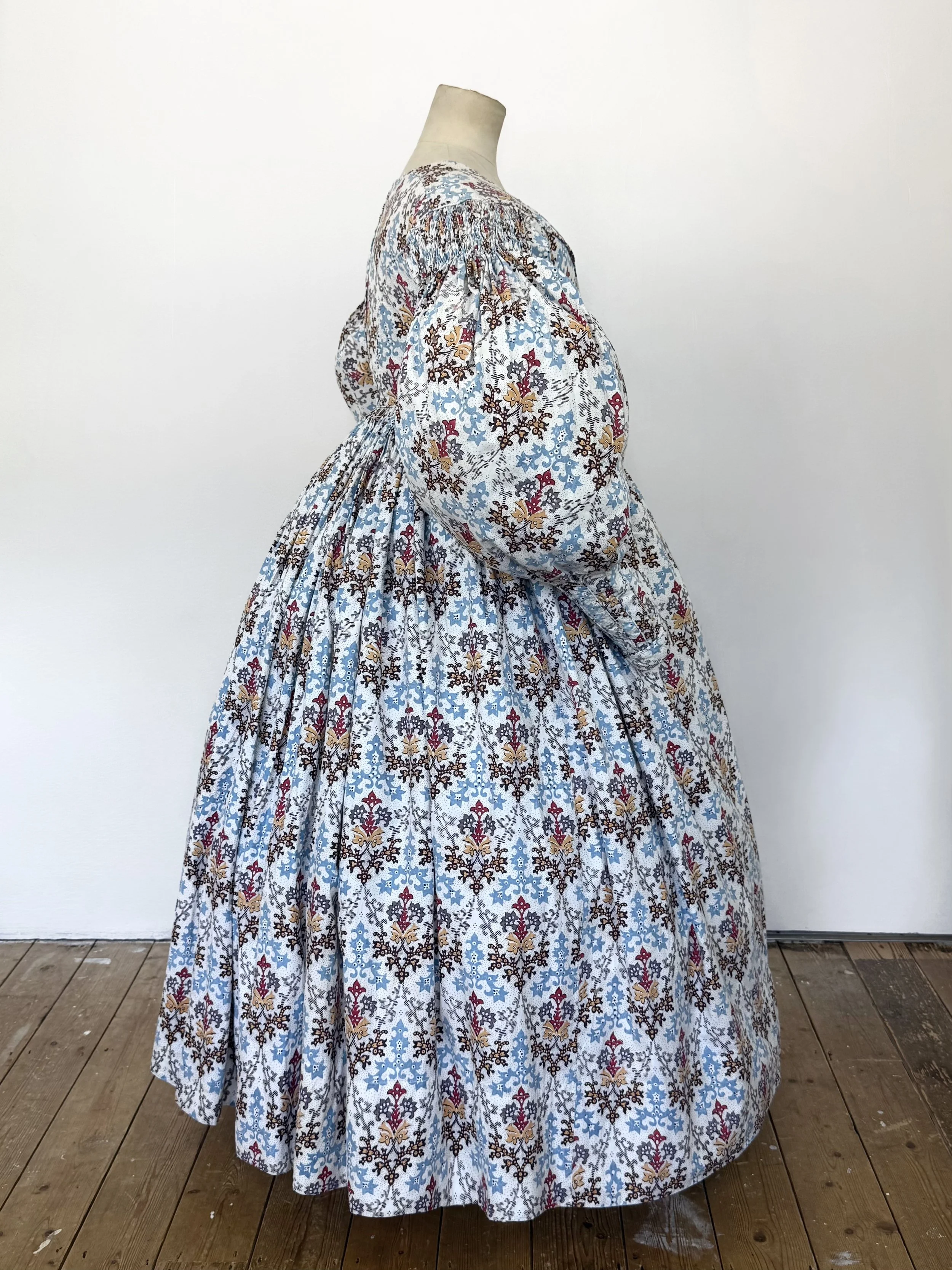 Image 3 of 23
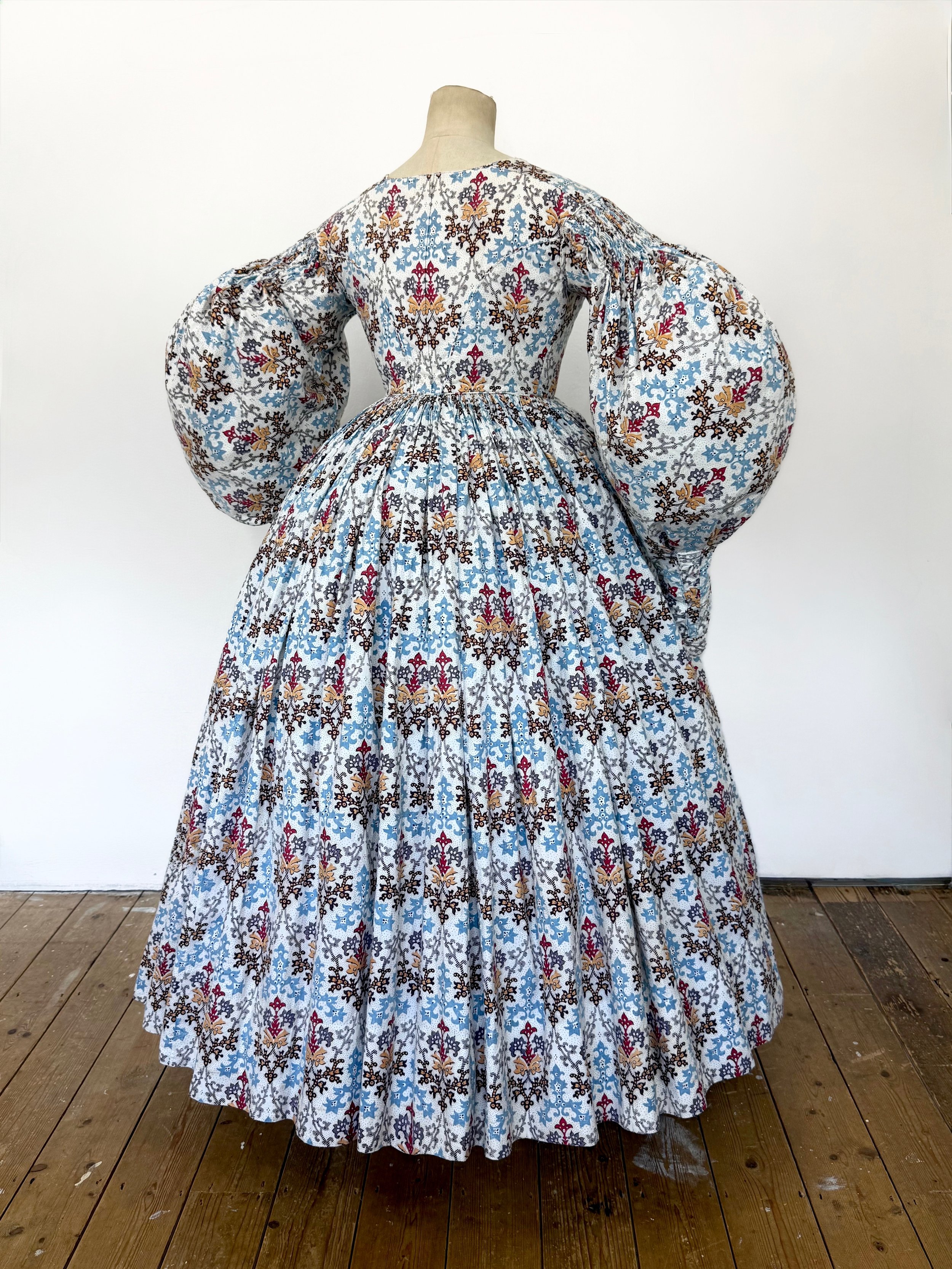 Image 4 of 23
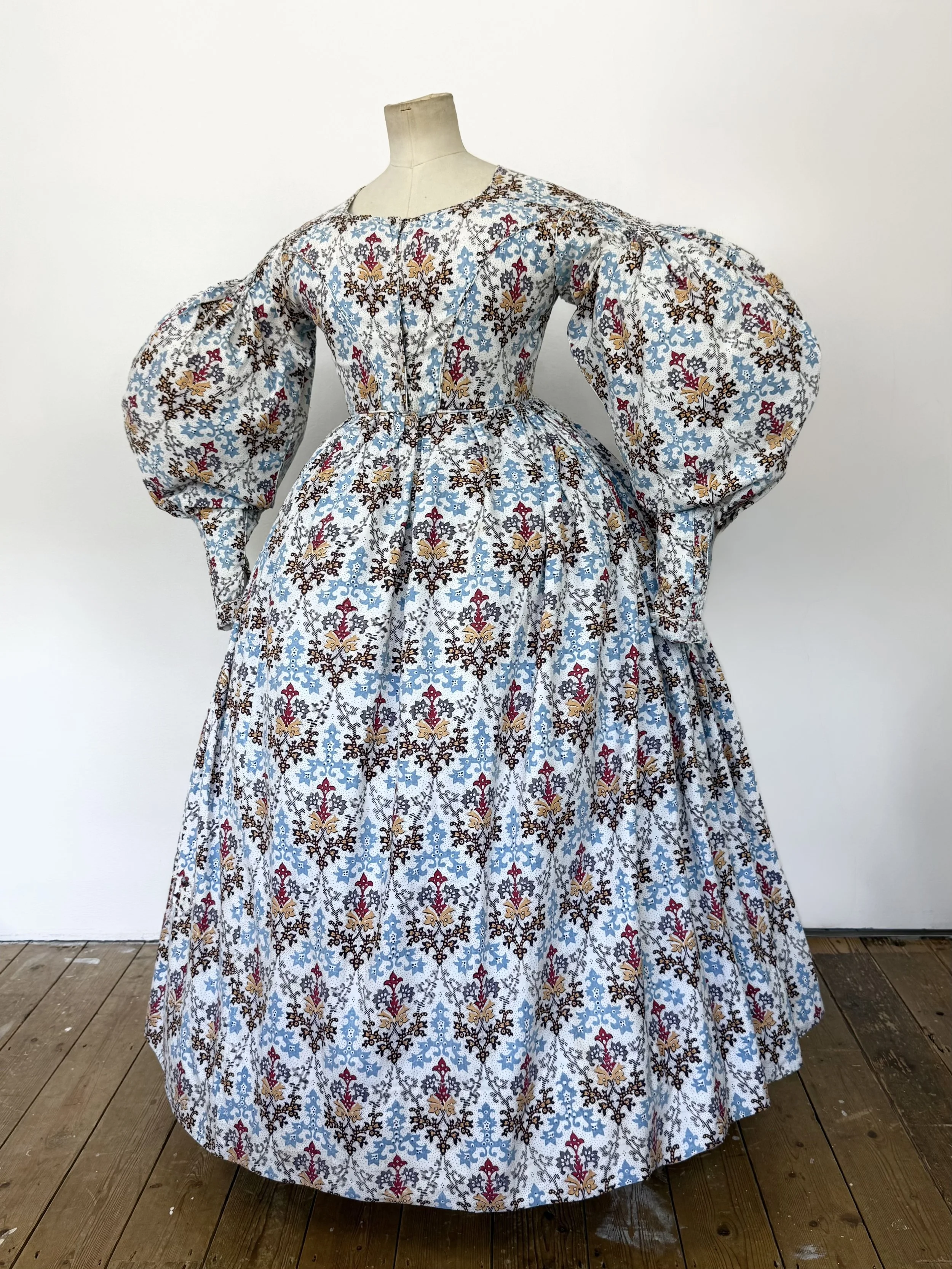 Image 5 of 23
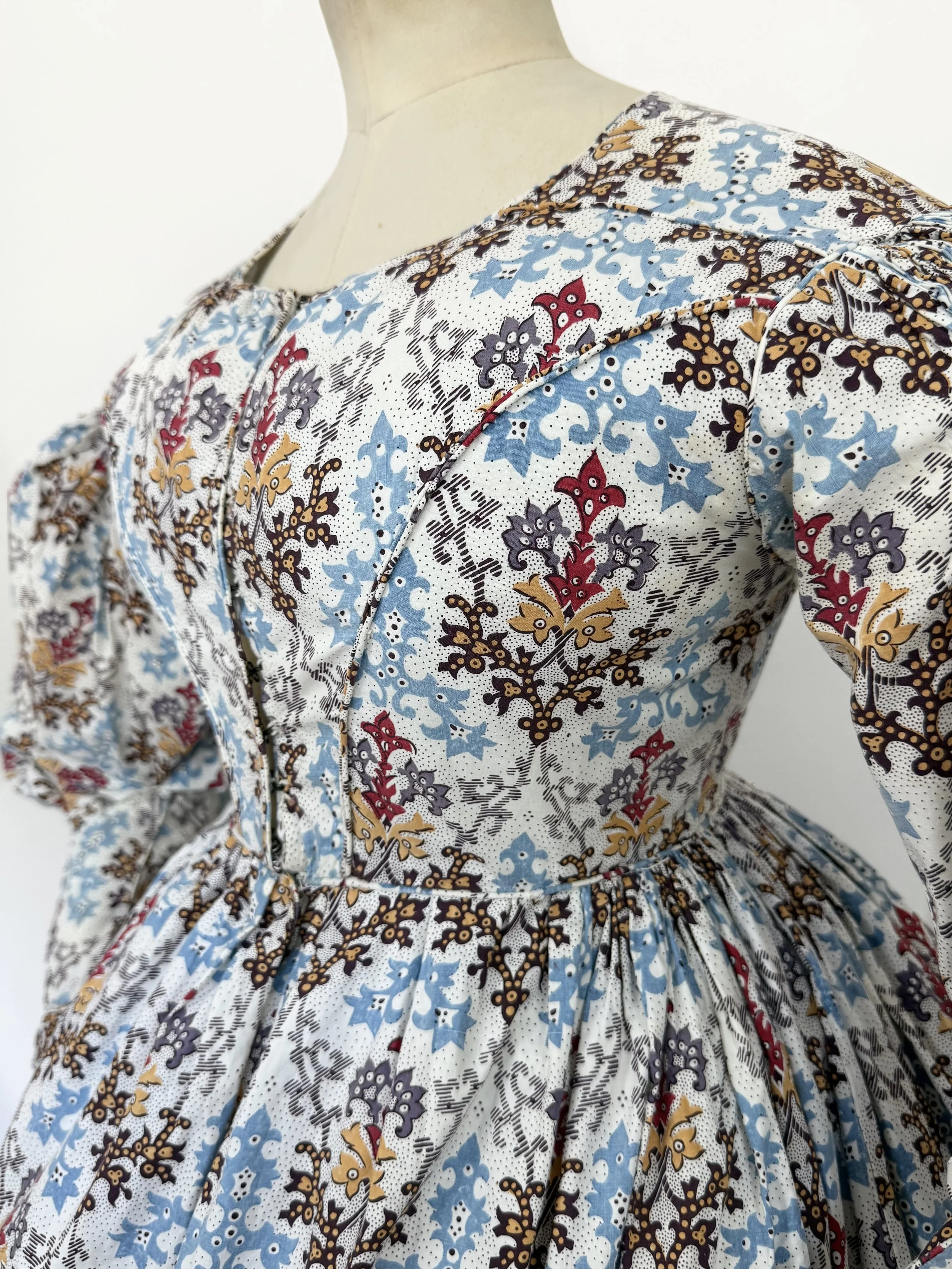 Image 6 of 23
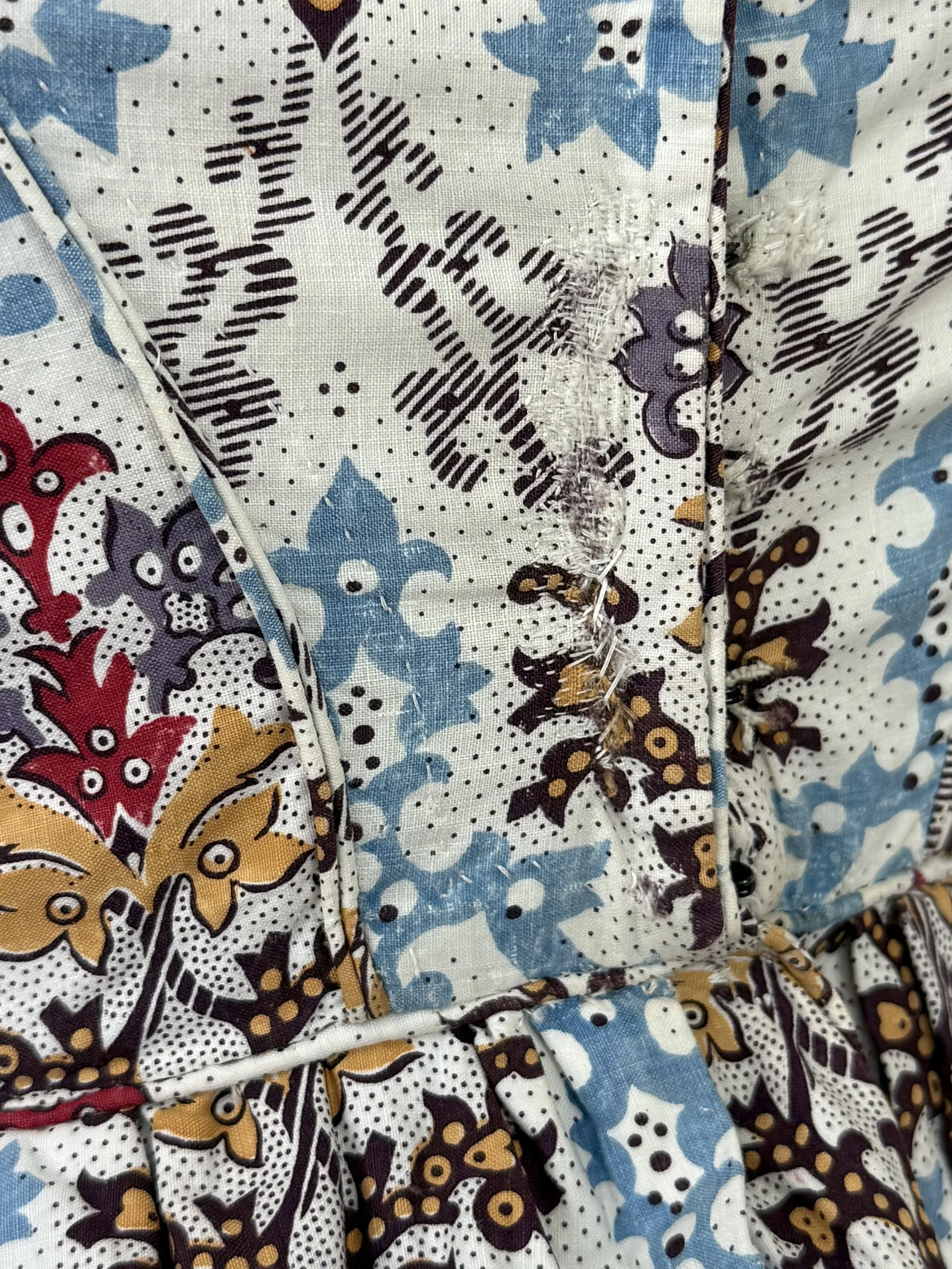 Image 7 of 23
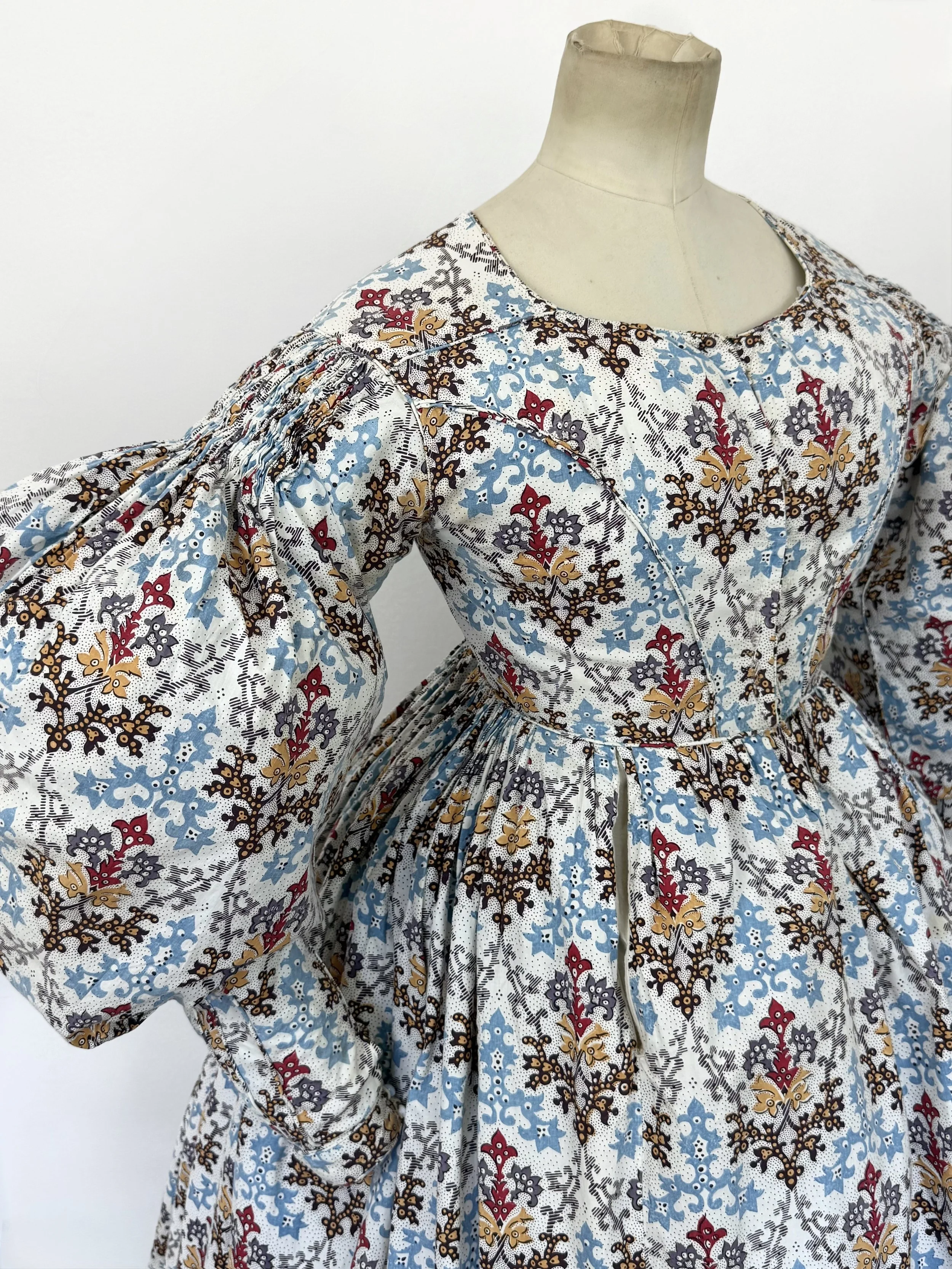 Image 8 of 23
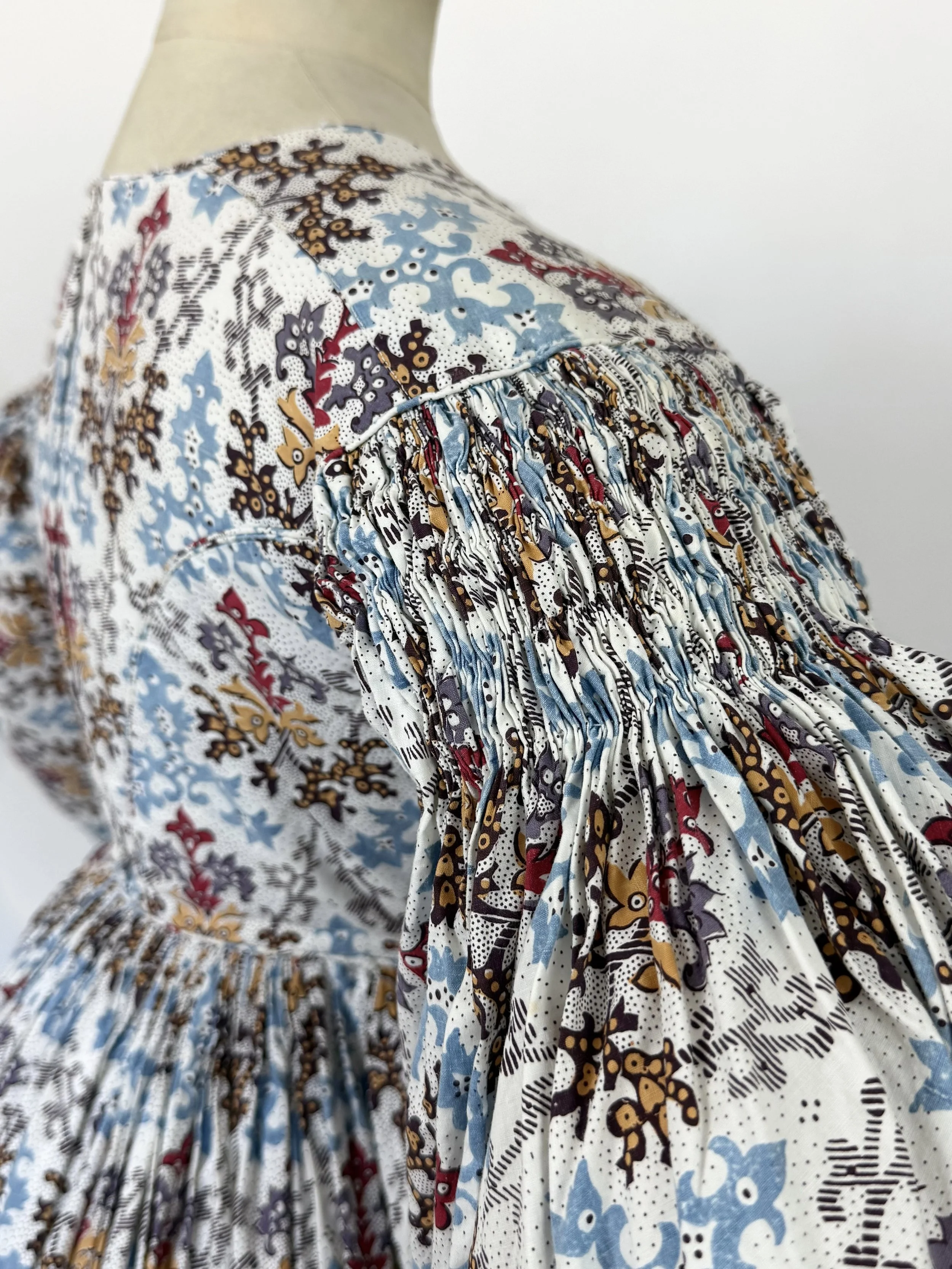 Image 9 of 23
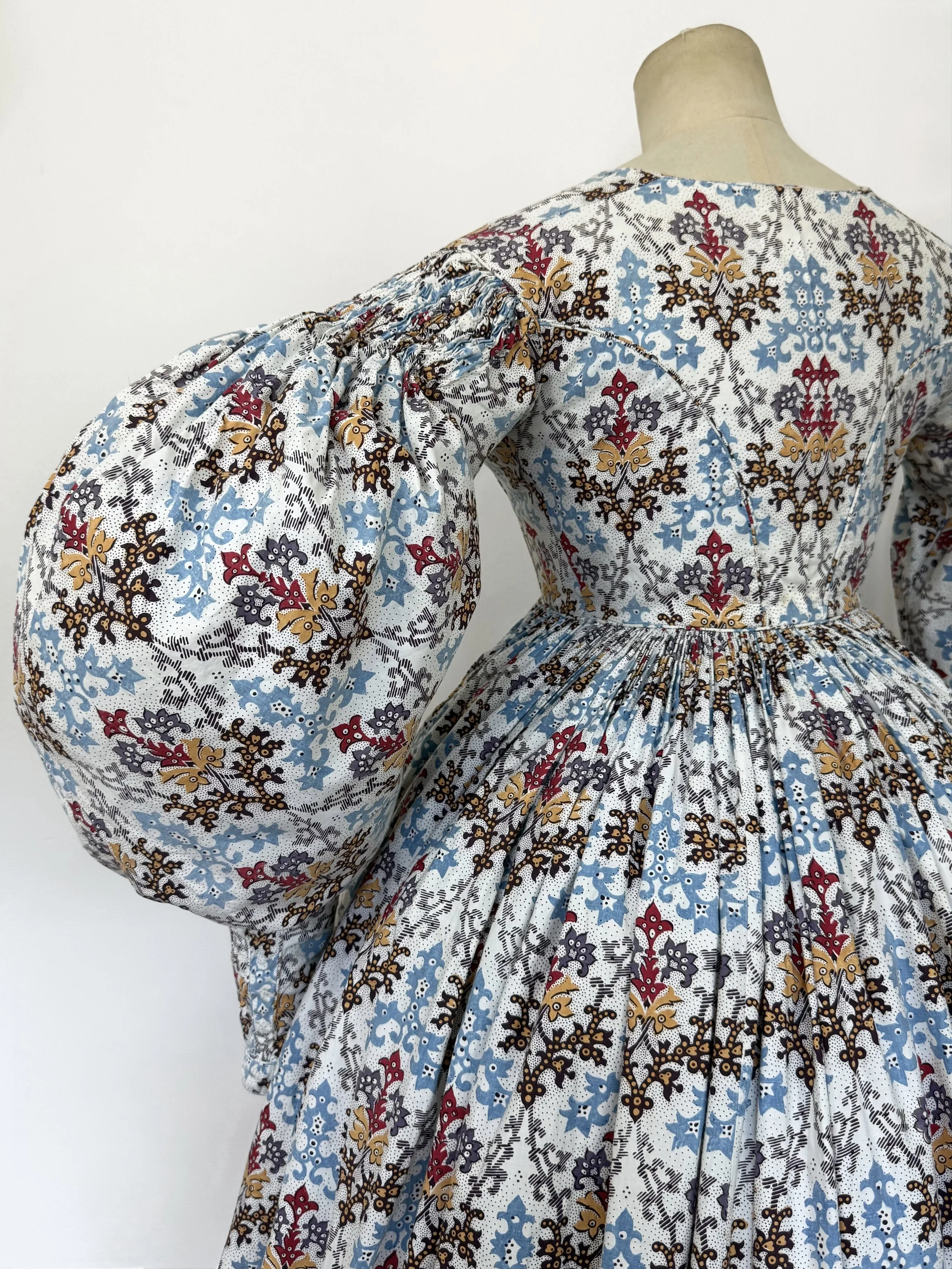 Image 10 of 23
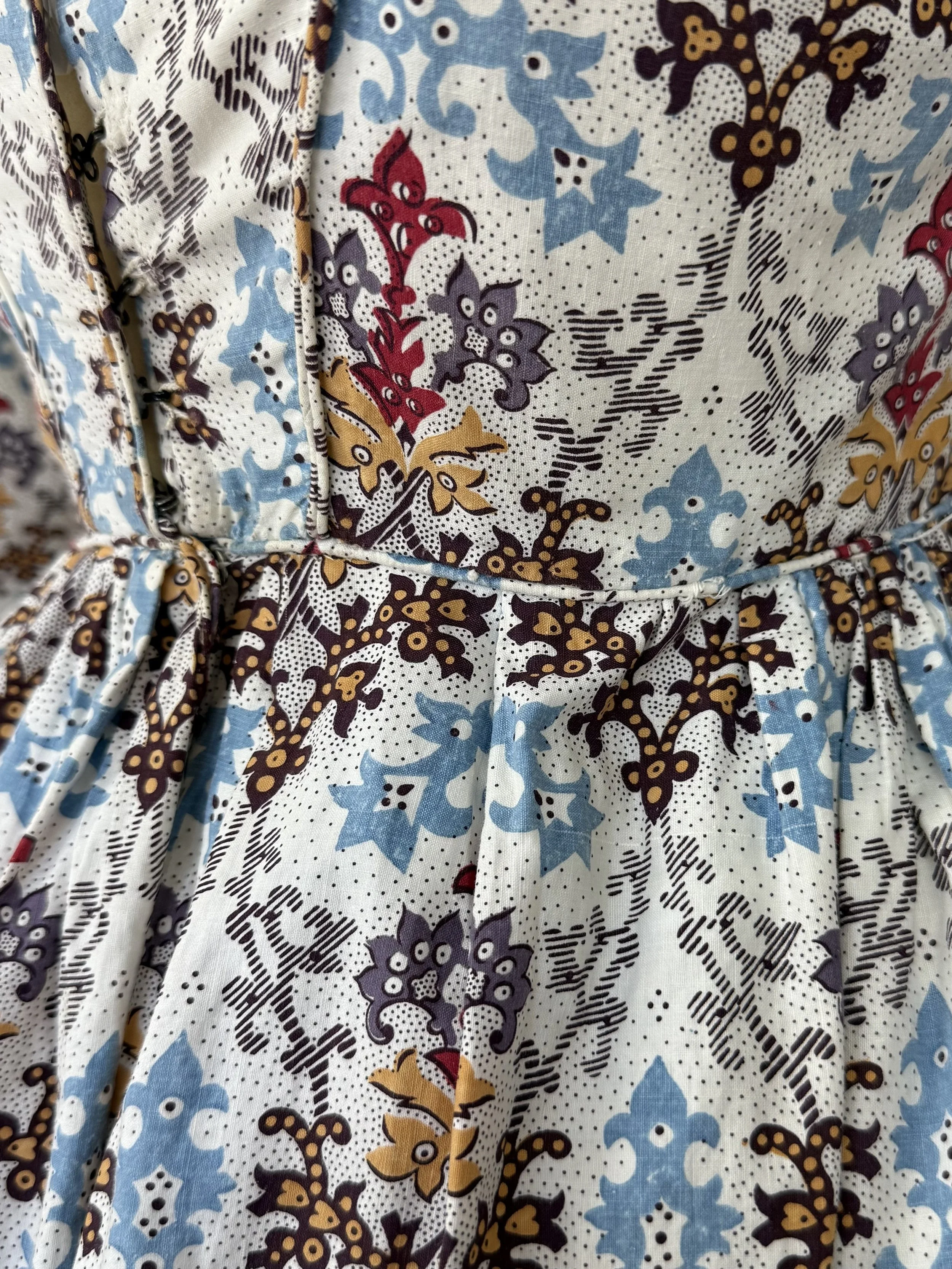 Image 11 of 23
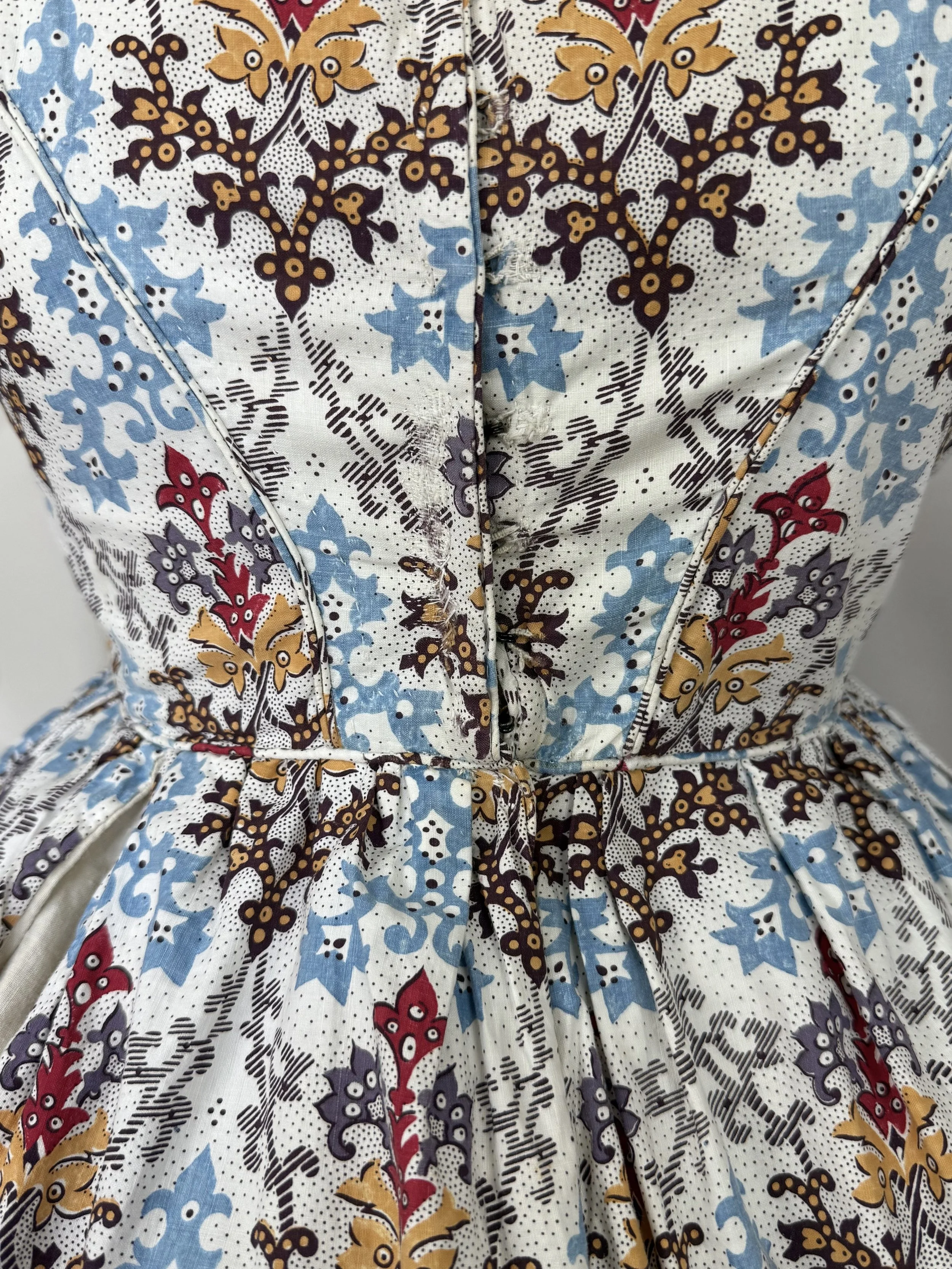 Image 12 of 23
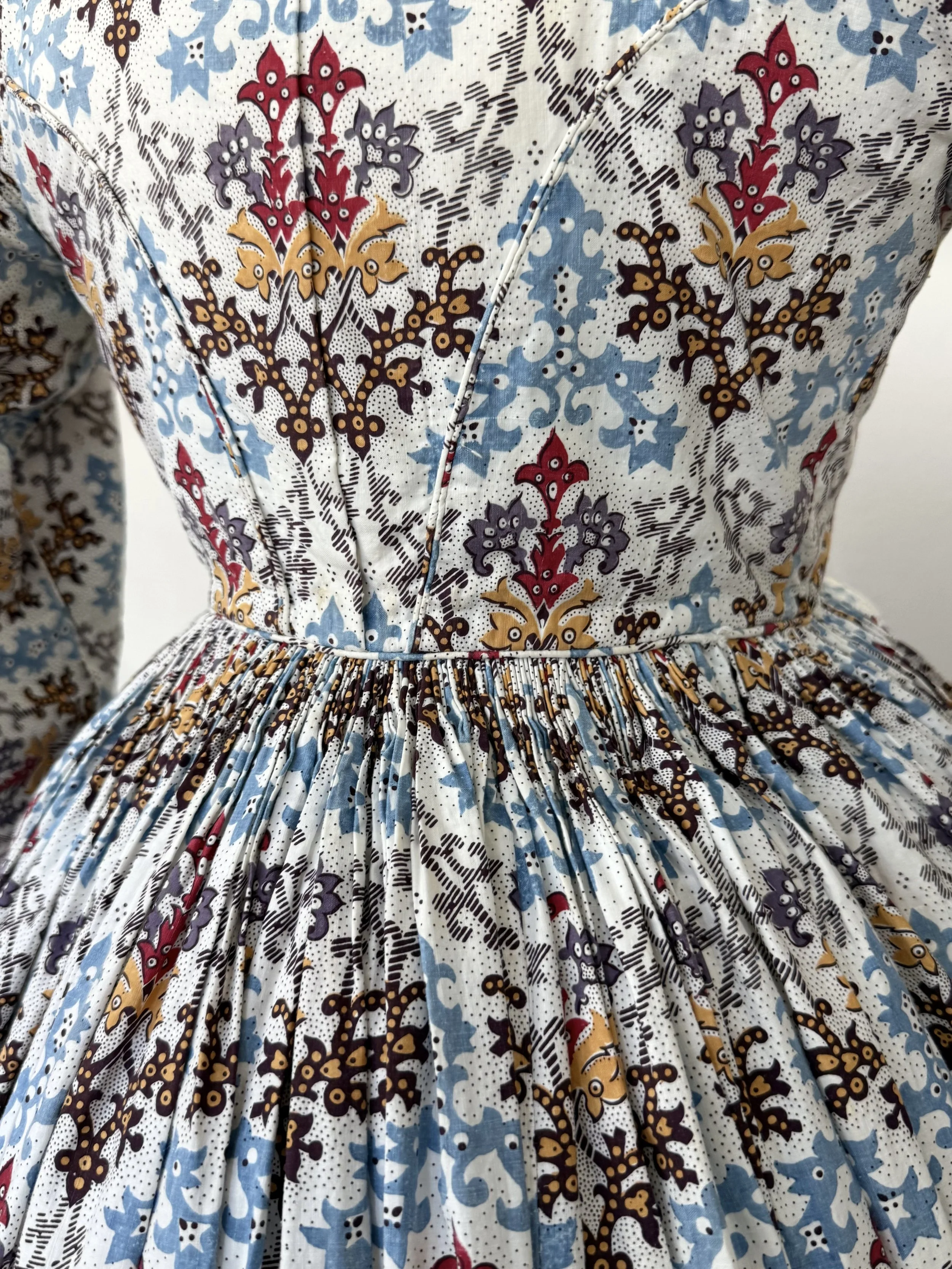 Image 13 of 23
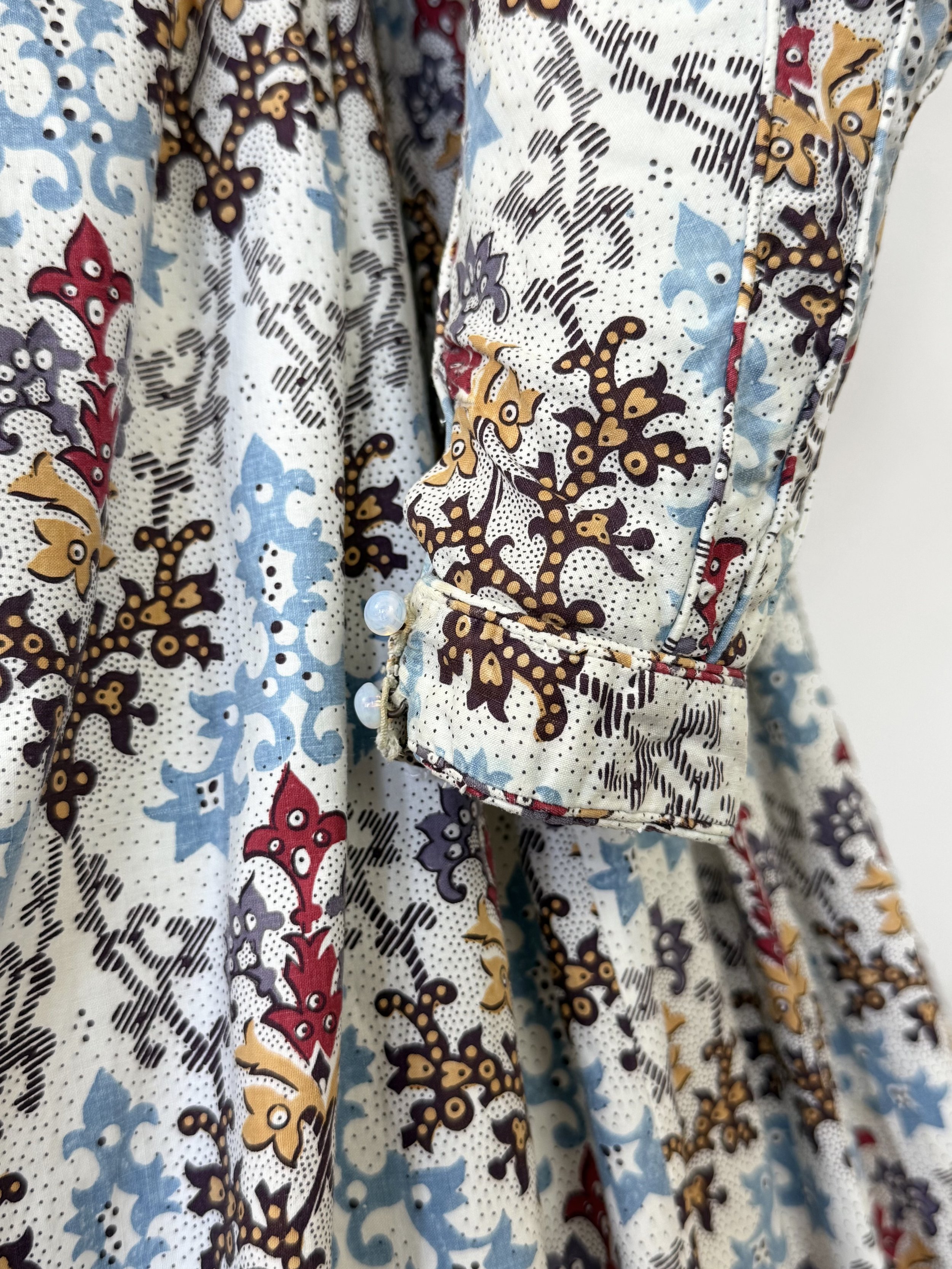 Image 14 of 23
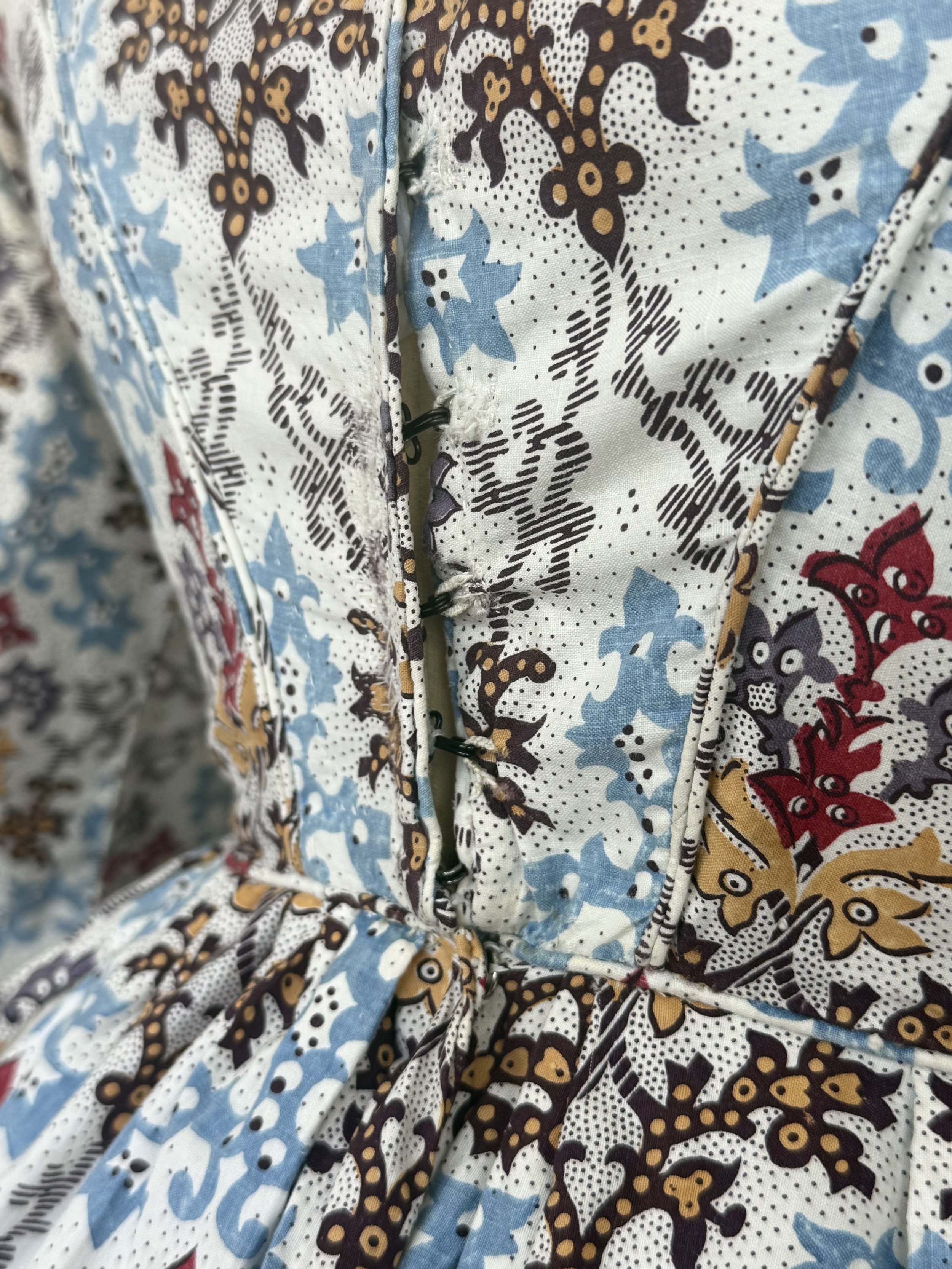 Image 15 of 23
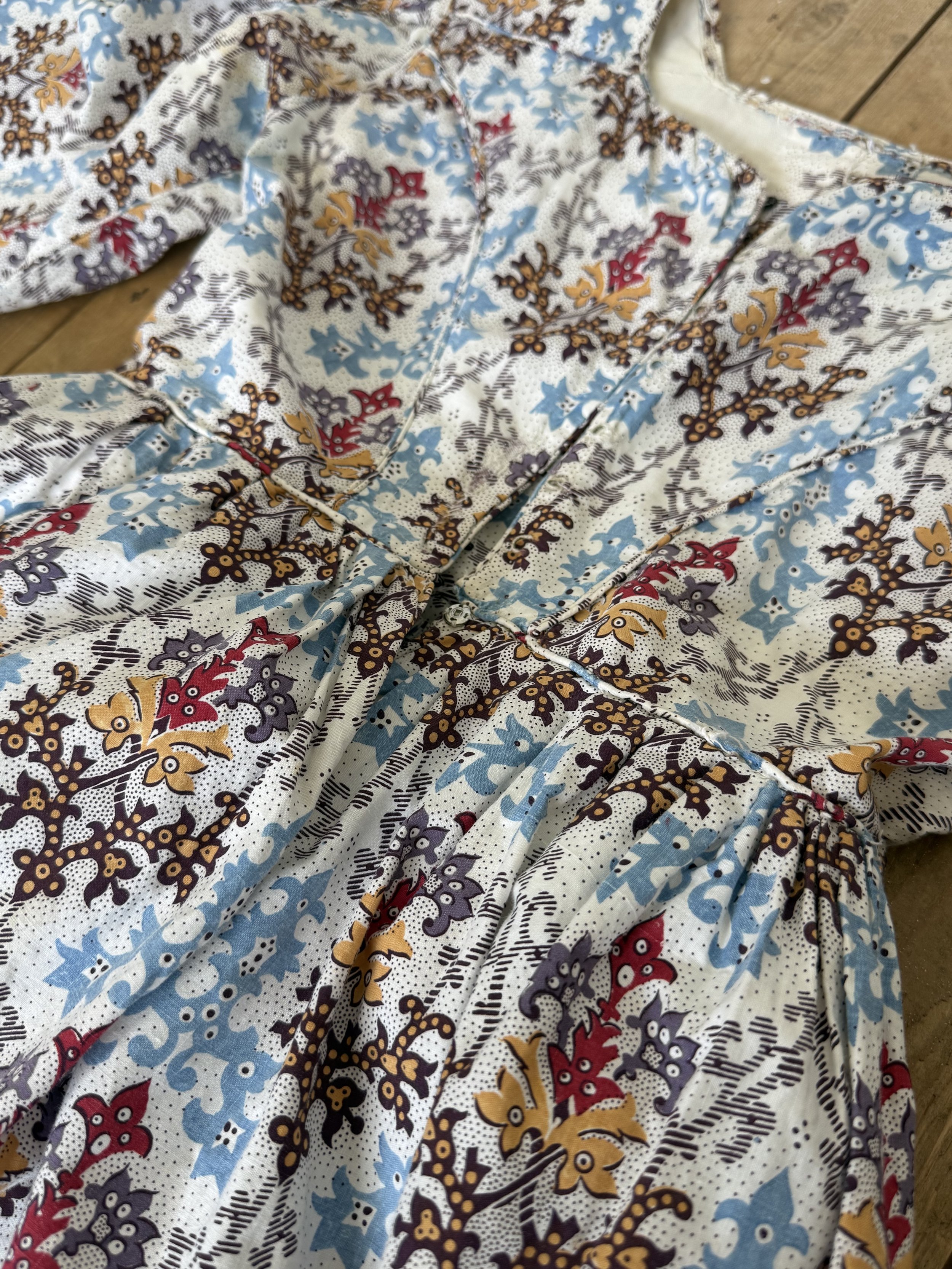 Image 16 of 23
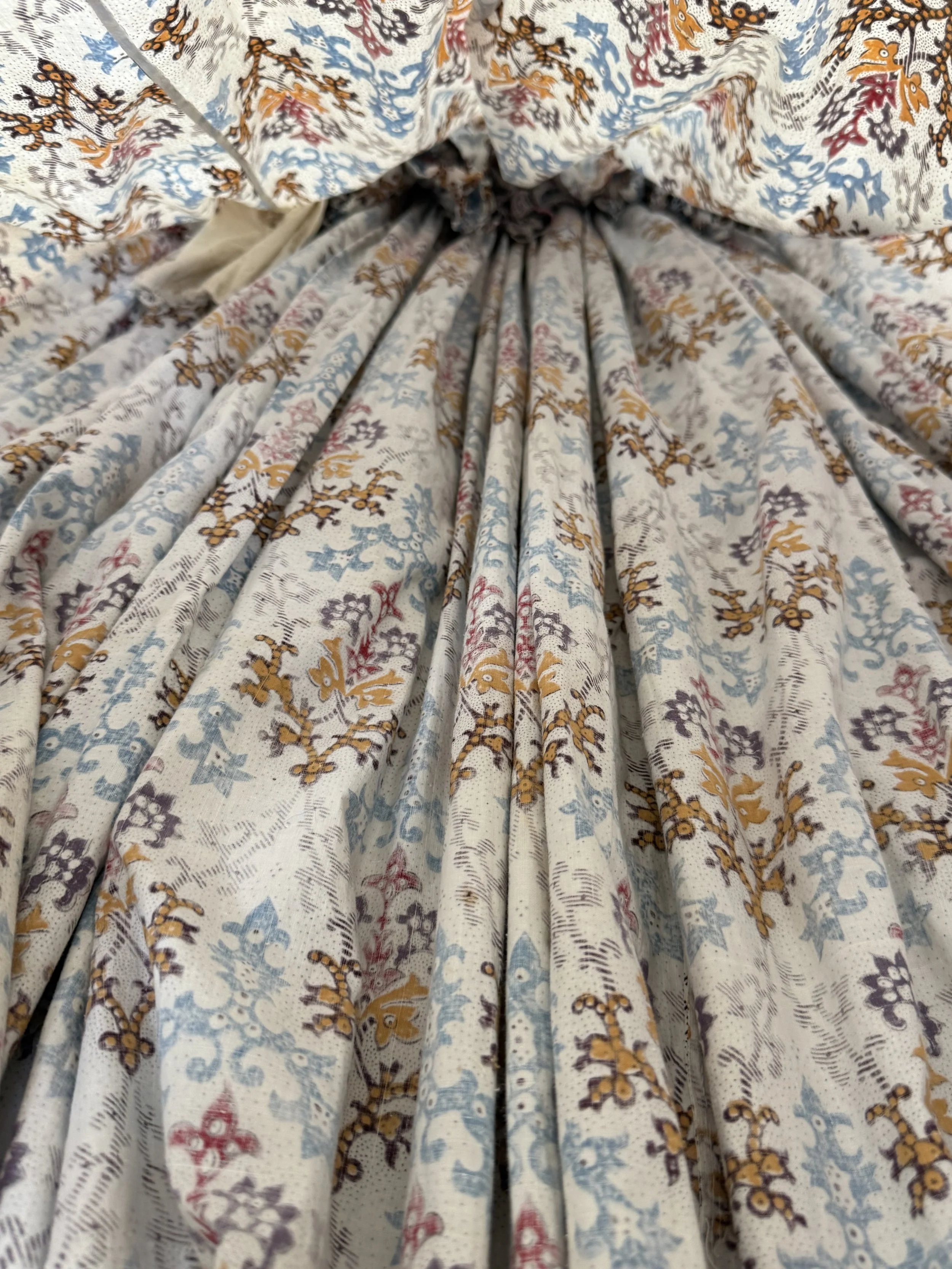 Image 17 of 23
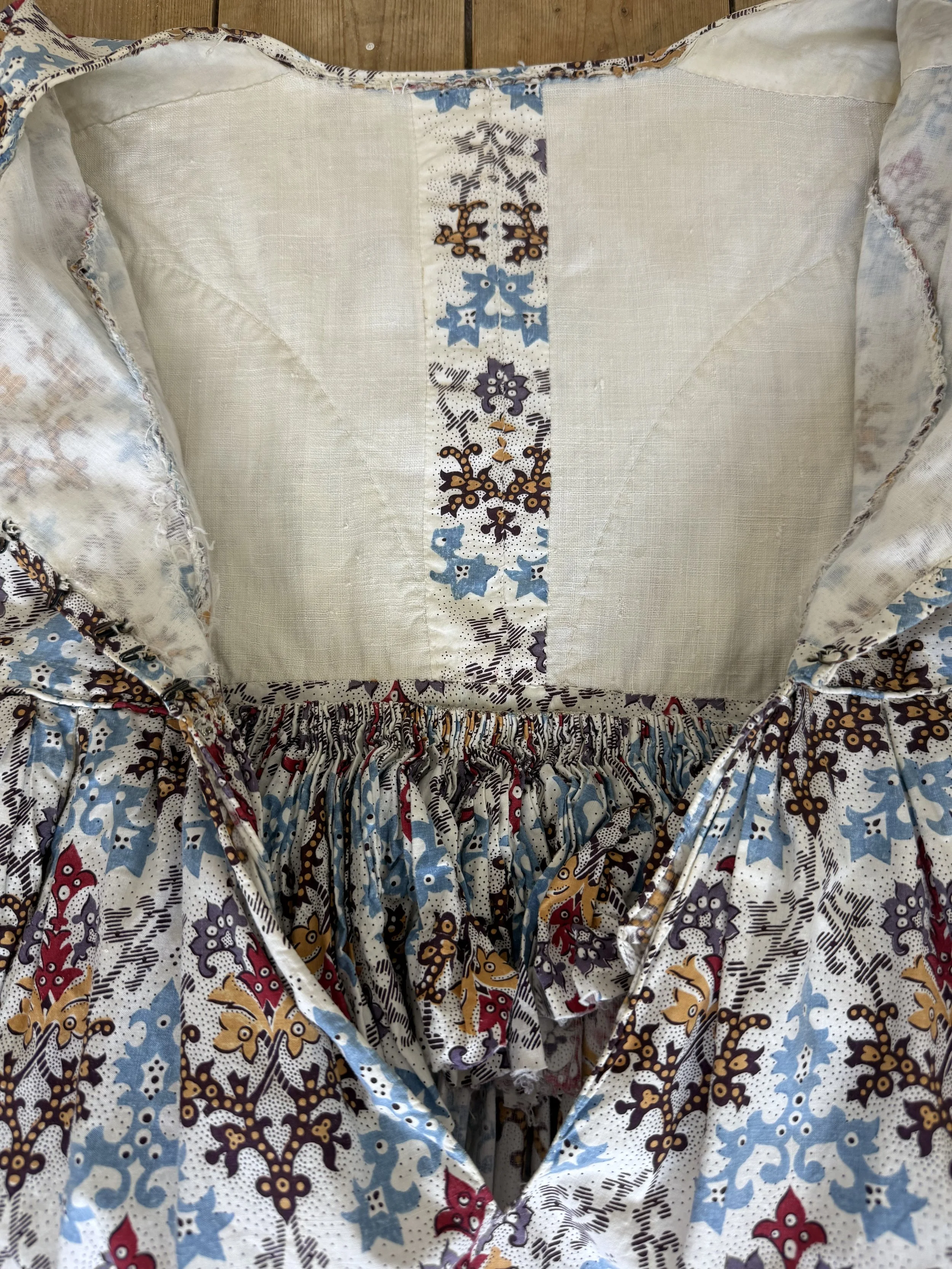 Image 18 of 23
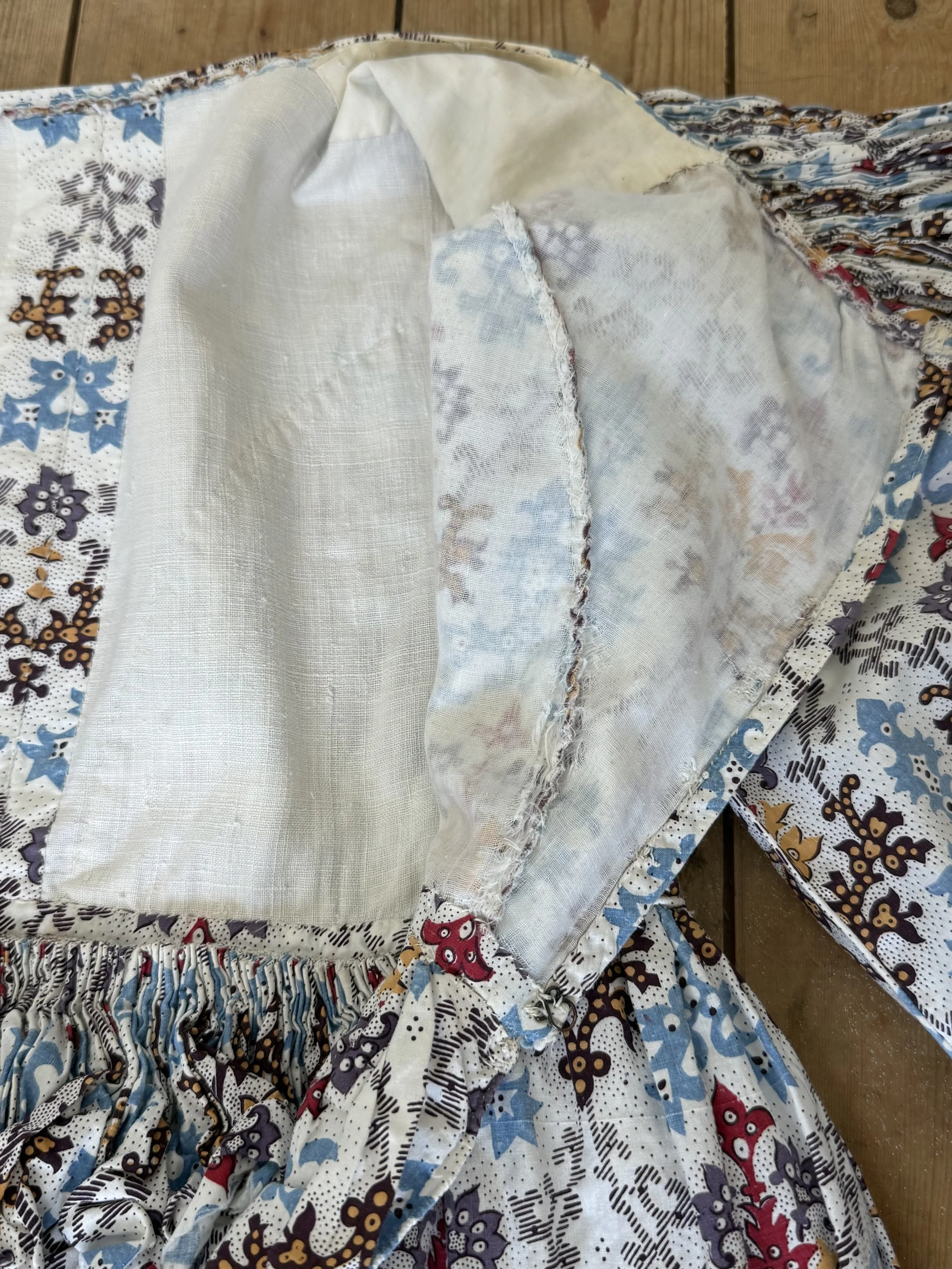 Image 19 of 23
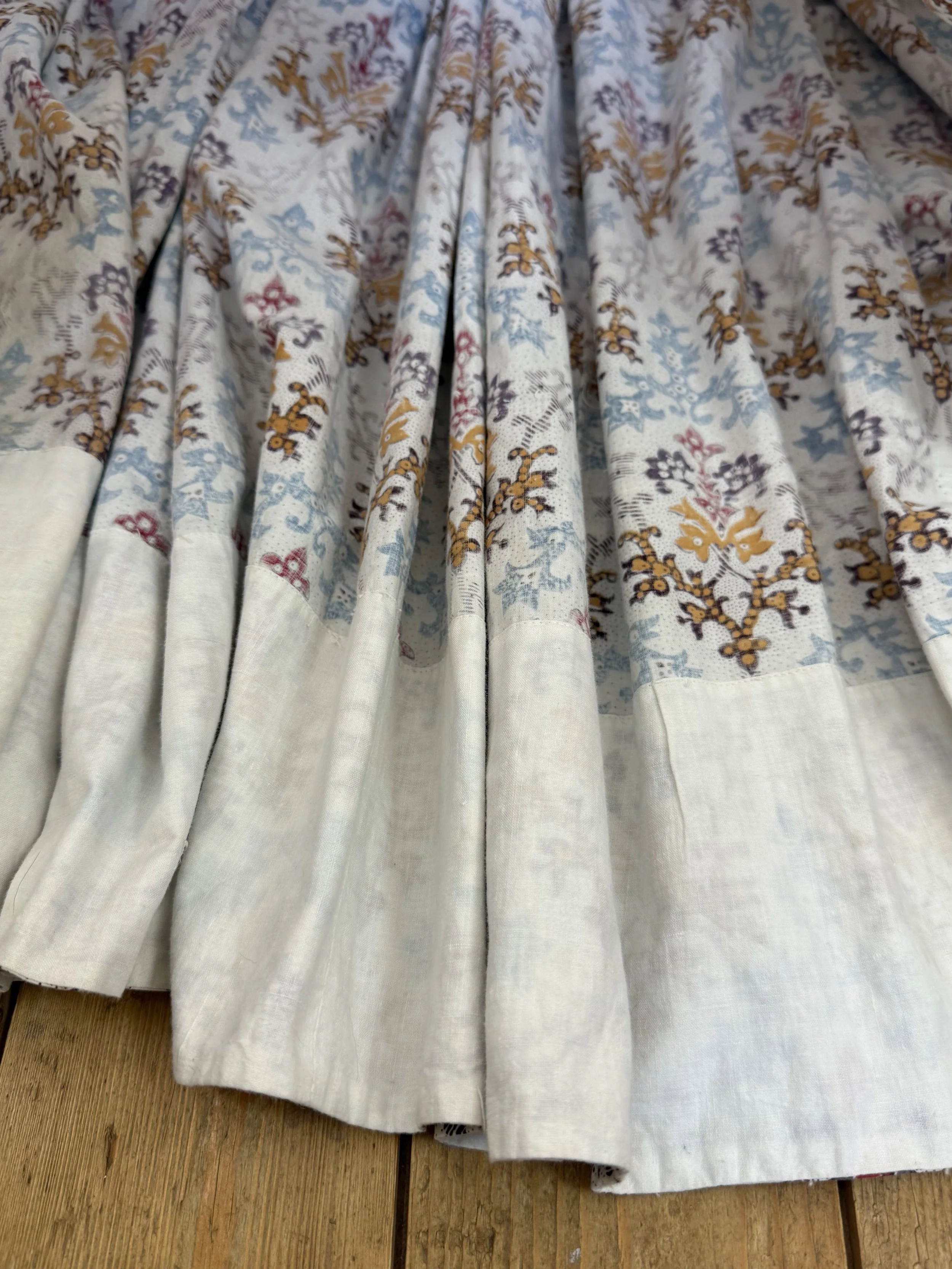 Image 20 of 23
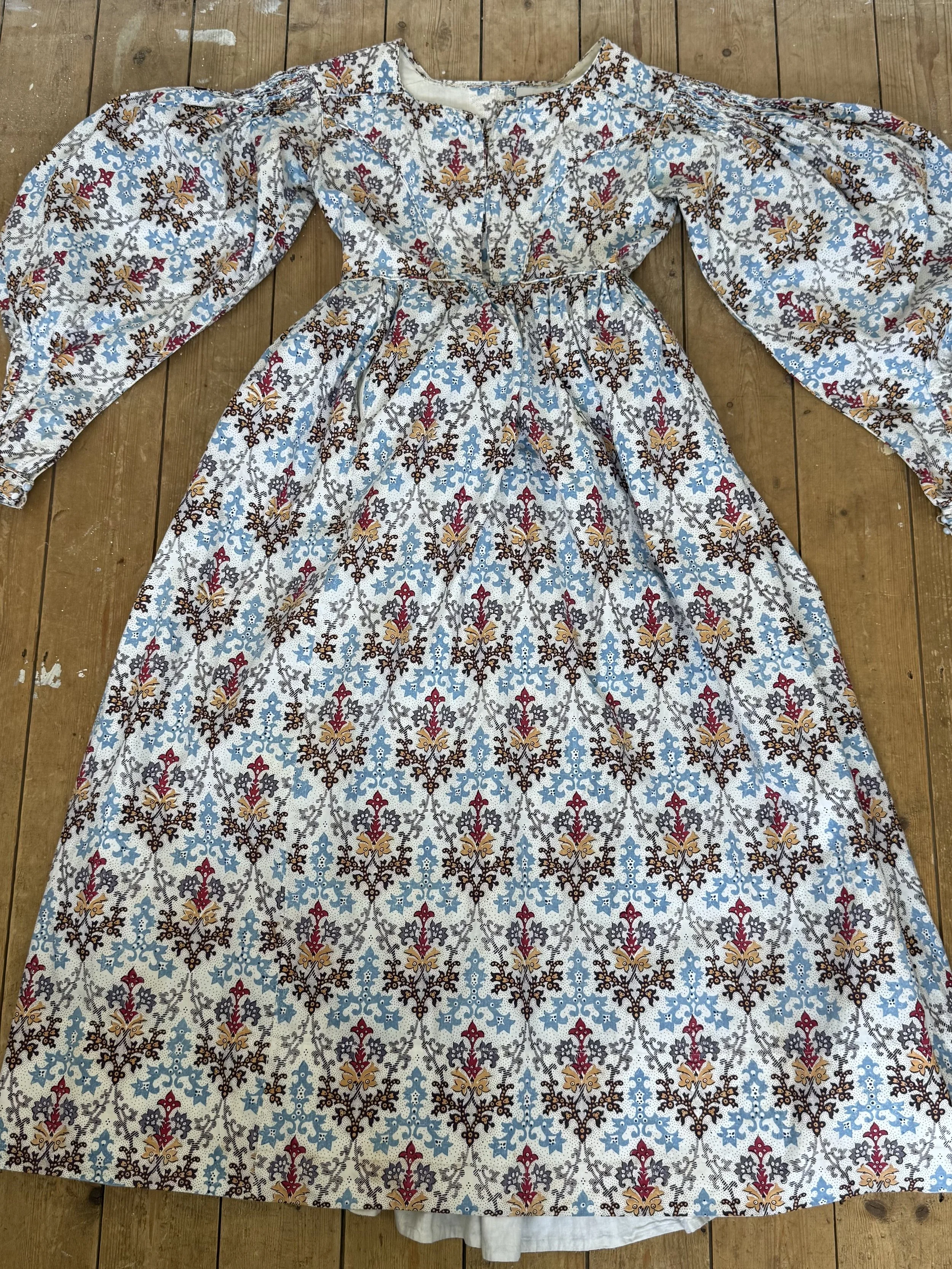 Image 21 of 23
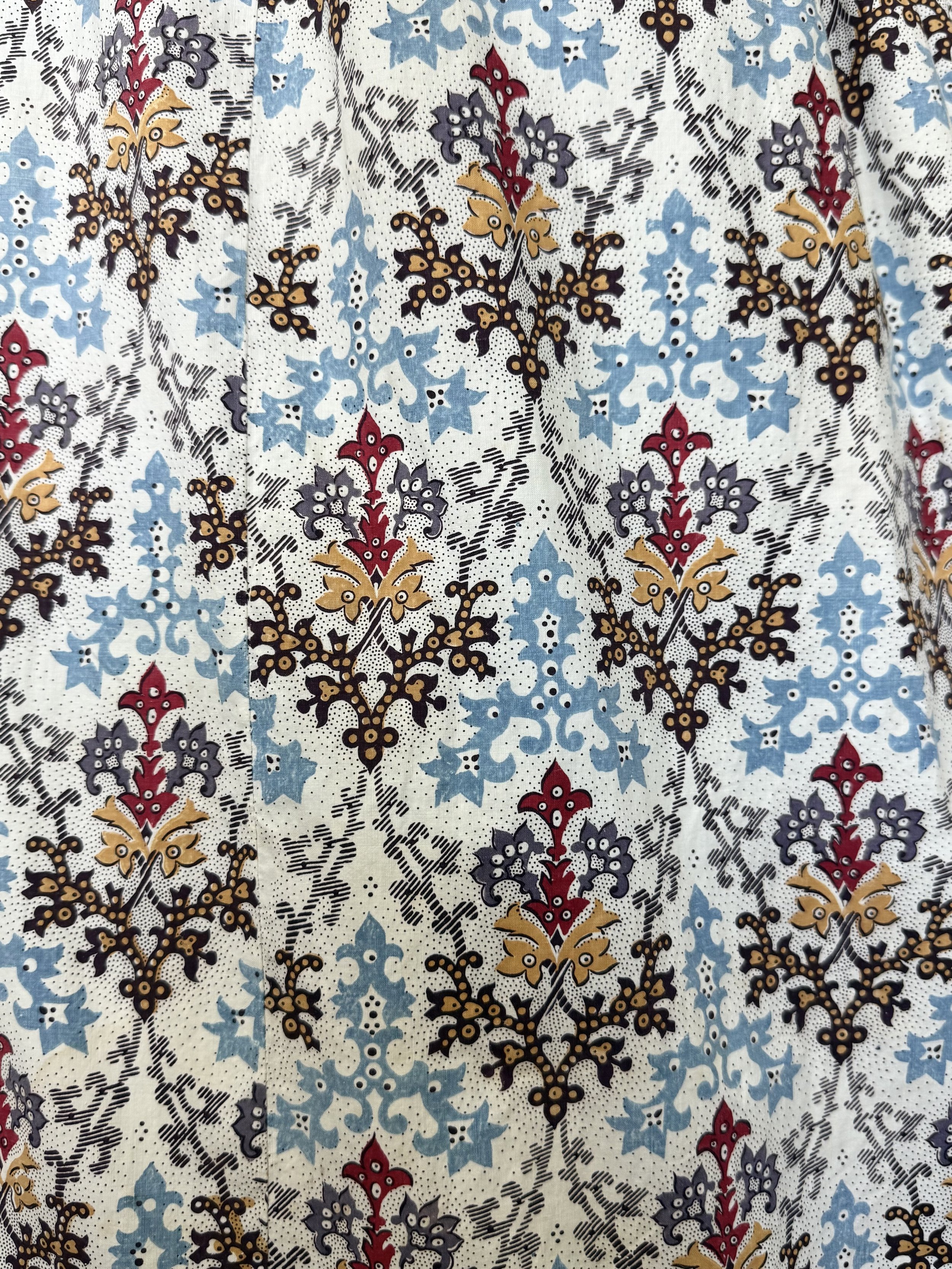 Image 22 of 23
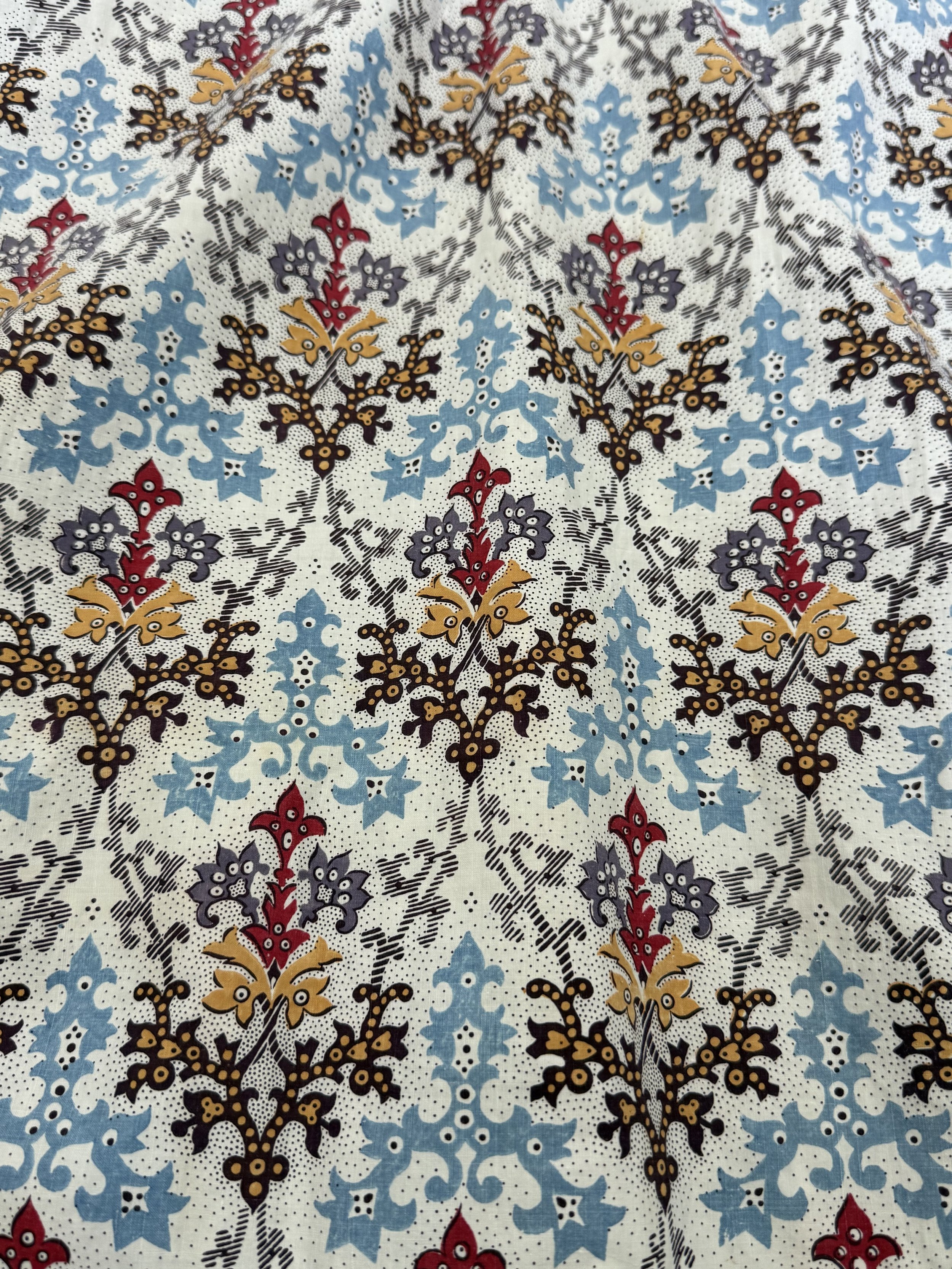 Image 23 of 23